
In partnership with

Salutations, Olio aficionados! 👋
Welcome to the 218th edition of Weekly Olio. We’re thrilled to introduce a fresh new twist to your Sundays: Publisher Parmesan, our hand-picked, thoughtfully crafted edition designed to spark inspiration and insights for the week ahead.
It’s the perfect way to unwind, recharge, and prepare for the week with something truly worth savoring.
If you’re new here and you’re looking for more long-form, crispy writing, click the link to subscribe under this GIF 👇

A word from our Sponsors…

A big 2026 starts now. True builders use this stretch of time to get ahead, not slow down. Launch your website with AI, publish a stunning newsletter, and start earning more money quickly through the beehiiv Ad Network. Use code BIG30 for 30 percent off your first three months. Start building for 30% off today.
When Craft Becomes a Moat: The Lanzhou Gold Brand Investors Didn’t See Coming
If you want to understand how China’s consumer landscape is mutating, skip the luxury malls in Shanghai and look instead toward a single workshop in Lanzhou, where the sound of a hammer hitting gold has shaped an unlikely national phenomenon.
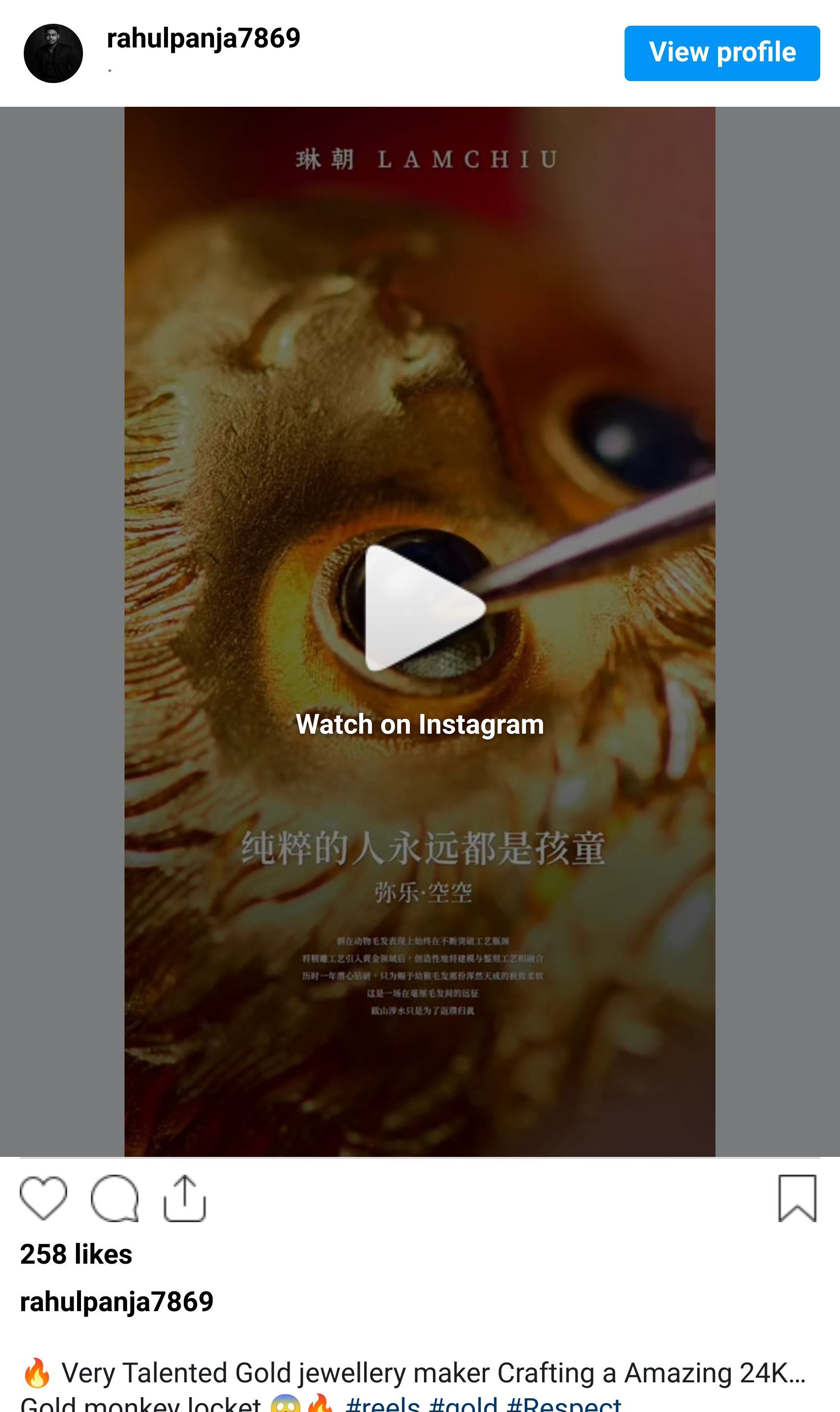
Lamchiu, a brand founded in 2006, did not suddenly appear. Its story begins long before its founder, Ma Chaoxian, was even born. His family worked in gold processing through the 1970s. Ma grew up surrounded by metal filings and the steady rhythm of hand tools. By fourteen he could make rings. That background becomes crucial later, because Lamchiu’s rise has little to do with retail strategy and everything to do with a worldview built at a workbench.
Over the past year China’s gold market has done something unusual. Prices surged to record levels and, in parallel, consumer appetite for Chinese-style gold exploded. Many brands benefited, but none in quite the same way as Lamchiu. The company sits on only one physical store, yet its livestream-driven breakout pushed annual sales past RMB 500 million by November. Then came more than RMB 100 million in funding from Dayone Capital. It was the kind of commitment that tells you an investor is buying a philosophy, not just a quarter.

To understand why Lamchiu resonates, you need to understand what it is not.
It is not a scaled retailer. It is not a fast-fashion jewelry machine. And it is certainly not a brand chasing growth at all costs.
Ma keeps Lamchiu almost deliberately undersupplied. The company works almost entirely on a custom basis. Ninety nine percent of its catalog is original design. A complicated filigree piece can take months, even a full year, to complete. Production delays frustrate customers and limit growth. Yet these constraints form the brand’s moat.
The logic is simple in hindsight. For two decades, China’s jewelry sector competed through channels and business models. Whoever secured better store locations, broader distribution, or more aggressive marketing won share. What that era rarely produced was craft. Consumers got volume and variety, but rarely work that felt singular.
Lamchiu went the other direction.
Originality as Infrastructure
Ma speaks about technique like an engineer of beauty. He talks about how Lamchiu fuses global filigree with Chinese gold traditions, merges micro-setting with engraving, and experiments with structural innovations such as stitched gold or bead-lock spacing systems unseen for thousands of years.
These are not decorative flourishes. They are evidence of a design system expanding the language of gold rather than remixing existing motifs.
Ma’s central thesis is simple: many brands innovate by adjusting or upgrading what already exists. Lamchiu tries to innovate from zero. The uncertainty is enormous. He admits a ten gram ring priced at RMB 20,000 may cost over RMB 500,000 to develop. That sounds irrational until you treat craftsmanship as an investment rather than a cost.
This is where the investor narrative shifts.
Why Dayone Spent a Year Chasing the Founder
Dayone Capital’s founder, Chen Feng, spent almost a year trying to secure a meeting with Ma. He persisted through every ignored message. At one point, he continued discussions even while his wife was giving birth.
Chen believed China’s next jewelry chapter would be driven by brands built on culture, original design, and deep technical reserves. China has no shortage of gold retailers. What it lacks is a brand with extreme craftsmanship and the potential to become a global cultural export.
Ma initially resisted. He feared capital would force speed. Scaling custom craftsmanship can distort the very thing that makes a brand desirable. But Chen didn’t pitch speed. He pitched alignment. Dayone would help group-build operations, training systems, channel discipline, and supply chain structures without diluting the craft.
For Lamchiu, the capital matters less than the management operating system behind it.
What investment is rudimentary for billionaires but ‘revolutionary’ for 70,571+ investors entering 2026?

Imagine this. You open your phone to an alert. It says, “you spent $236,000,000 more this month than you did last month.”
If you were the top bidder at Sotheby’s fall auctions, it could be reality.
Sounds crazy, right? But when the ultra-wealthy spend staggering amounts on blue-chip art, it’s not just for decoration.
The scarcity of these treasured artworks has helped drive their prices, in exceptional cases, to thin-air heights, without moving in lockstep with other asset classes.
The contemporary and post war segments have even outpaced the S&P 500 overall since 1995.*
Now, over 70,000 people have invested $1.2 billion+ across 500 iconic artworks featuring Banksy, Basquiat, Picasso, and more.
How? You don’t need Medici money to invest in multimillion dollar artworks with Masterworks.
Thousands of members have gotten annualized net returns like 14.6%, 17.6%, and 17.8% from 26 sales to date.
*Based on Masterworks data. Past performance is not indicative of future returns. Important Reg A disclosures: masterworks.com/cd
Scarcity as Strategy
From a VC’s lens, Lamchiu is a textbook case of scarcity turned strategic.
Delivery times stretch to a year. Customers complain, yet still buy. A notable share of the customer base is male: watch collectors, yacht owners, finance professionals. They treat Lamchiu not as jewelry but as collectible art. That shift moves the brand out of the weight-based pricing trap and into a value-based narrative.
Lamchiu’s production limitations are often portrayed as a problem. In reality, they are a signal. A brand that cannot be overproduced becomes a brand that can command premium attention.
Where Craft Meets Market Reality
The boom in “ancient-style” gold has pulled many brands into the spotlight, but Ma sees the current wave differently. Rising gold prices have actually crushed many traditional jewelers, who depend on fast inventory turnover. Consumers, he argues, were not waiting for another marketing gimmick. They were waiting for someone to build product with genuine imagination.
Yet the category is now noisy. Brands attach the term ancient gold to almost anything. Ma dislikes the label altogether. For him, technique is the difference. One engraving tool can carve. Lamchiu uses up to ten for a single motif. Filigree is not a selling point. It is a standard.
This is the brand’s long-term risk. Authenticity is easier to recognize than to scale. Artisans take years to train. Young people willing to master this slow craft are scarce. Even if Lamchiu hired one hundred new artisans tomorrow, output might not improve much because standards rise every year.
Expansion will remain slow. Ma expects perhaps one new store per year. In a consumer landscape obsessed with rapid growth, Lamchiu moves at a craftsman’s pace.
The Real Question: Can Craft Scale Without Breaking?
Lamchiu sits at a crossroads. The brand has cultural credibility, investor belief, and consumer momentum. But it also carries the Heisenberg challenge of craftsmanship: the act of scaling can change the thing being scaled.
If Ma and Dayone can translate craft into reproducible systems without homogenizing it, Lamchiu could become one of China’s most significant cultural luxury exports. If they fail, it will be because beauty that depends on human breath, touch, and judgement resists industrial logic.
Either way, the workshop in Lanzhou will keep humming. For the first time, the market is listening closely enough to hear it.
Interested in learning more about precious metals and jewelry? Check out our previous coverage here:
Get the investor view on AI in customer experience

Customer experience is undergoing a seismic shift, and Gladly is leading the charge with The Gladly Brief.
It’s a monthly breakdown of market insights, brand data, and investor-level analysis on how AI and CX are converging.
Learn why short-term cost plays are eroding lifetime value, and how Gladly’s approach is creating compounding returns for brands and investors alike.
Join the readership of founders, analysts, and operators tracking the next phase of CX innovation.
That’s all for this week. If you enjoyed this edition, we’d really appreciate if you shared it with a friend, family member or colleague.
We’ll be back in your inbox 2 PM IST next Sunday. Till then, have a productive week!
Disclaimer: The views, thoughts, and opinions expressed in the text belong solely to the author, and not necessarily to the author's employer, organization, committee or other group or individual.