
In partnership with

Salutations, Olio aficionados! 👋
Welcome to the 216th edition of Weekly Olio. We’re thrilled to introduce a fresh new twist to your Sundays: Publisher Parmesan, our hand-picked, thoughtfully crafted edition designed to spark inspiration and insights for the week ahead.
It’s the perfect way to unwind, recharge, and prepare for the week with something truly worth savoring.
If you’re new here and you’re looking for more long-form, crispy writing, click the link to subscribe under this GIF 👇

A word from our Sponsors…
AI-native CRM

“When I first opened Attio, I instantly got the feeling this was the next generation of CRM.”
— Margaret Shen, Head of GTM at Modal
Attio is the AI-native CRM for modern teams. With automatic enrichment, call intelligence, AI agents, flexible workflows and more, Attio works for any business and only takes minutes to set up.
Join industry leaders like Granola, Taskrabbit, Flatfile and more.
China’s Most Surprising EV Hit Is Not a Tesla or a BYD
China’s electric vehicle race has been a two horse show for years, with BYD and Tesla pulling so far ahead that everyone else looked like scenery. Then a tiny, cartoonish, no frills compact car priced at the level of three flagship iPhones quietly took the crown.
The top selling EV in the country is not a Model Y. It is not a BYD Dolphin or Seagull. It is not even a vehicle most international observers have heard of. The winner is a 3,300 dollar runabout built by Wuling, a joint venture of SAIC, GM, and Liuzhou Wuling.
Less than 24,000 RMB. Four seats. A maximum range that would give Western EV buyers an anxiety attack. And somehow it topped EV sales in the world’s biggest auto market.

To understand why, you have to step outside first tier cities. In small towns and rural counties across China you still see what development economists call the upgrade ladder. Millions of people commute and deliver goods on electric bikes and scooters. They run barbecue stands, small workshops, convenience stalls. They carry crates, coal, tools, supplies. They do not need a car that accelerates like a spaceship. They need a cheap, flexible box with wheels that gets them and their cargo from point A to point B.
Wuling saw that market long before the EV boom. Before cars, they were a minivan and micro pickup brand. They were the vehicle of small business owners who had never bought a new car before. When the company moved into EVs, it kept the same instinct. Their internal culture is almost monastic about not building anything customers do not need. That discipline is rare in an industry addicted to gadgets and prestige.
So instead of chasing long range batteries or 15 minute charging, Wuling offered a five hour charge time and a humble 120 kilometer range. That is plenty for a worker who stays within city boundaries. They skipped panoramic screens, premium interiors, and complex tech stacks. What they maximized was affordability, ease of repair, and modularity.
In other words, they treated EVs not as luxury innovation but as infrastructure.
A Story Told in Ads, Not Specs
If you watch Wuling’s ads, you see the strategy in motion. One spot that recently went viral does not feature torque numbers or battery chemistry. It follows a film crew sent to create a commercial. The sales champion who greets them quickly sizes them up, one by one.
The guy with a barbecue side hustle who needs a vehicle he can convert into a mobile supply van. The girl who just broke up with a boyfriend trying to launch a business and needs a starter car to share. The young man dating a wealthier woman whose lifestyle requires flexibility.
The pitch is subtle. The car becomes a prop for a possible future. A tool for aspiration. Something practical enough to own today and customizable enough to reshape tomorrow.
That matters more than any technical feature sheet. Markets forget that millions of first time car buyers do not dream of autopilot. They dream of securing a more stable income or taking their family on a weekend trip without worrying about the weather.
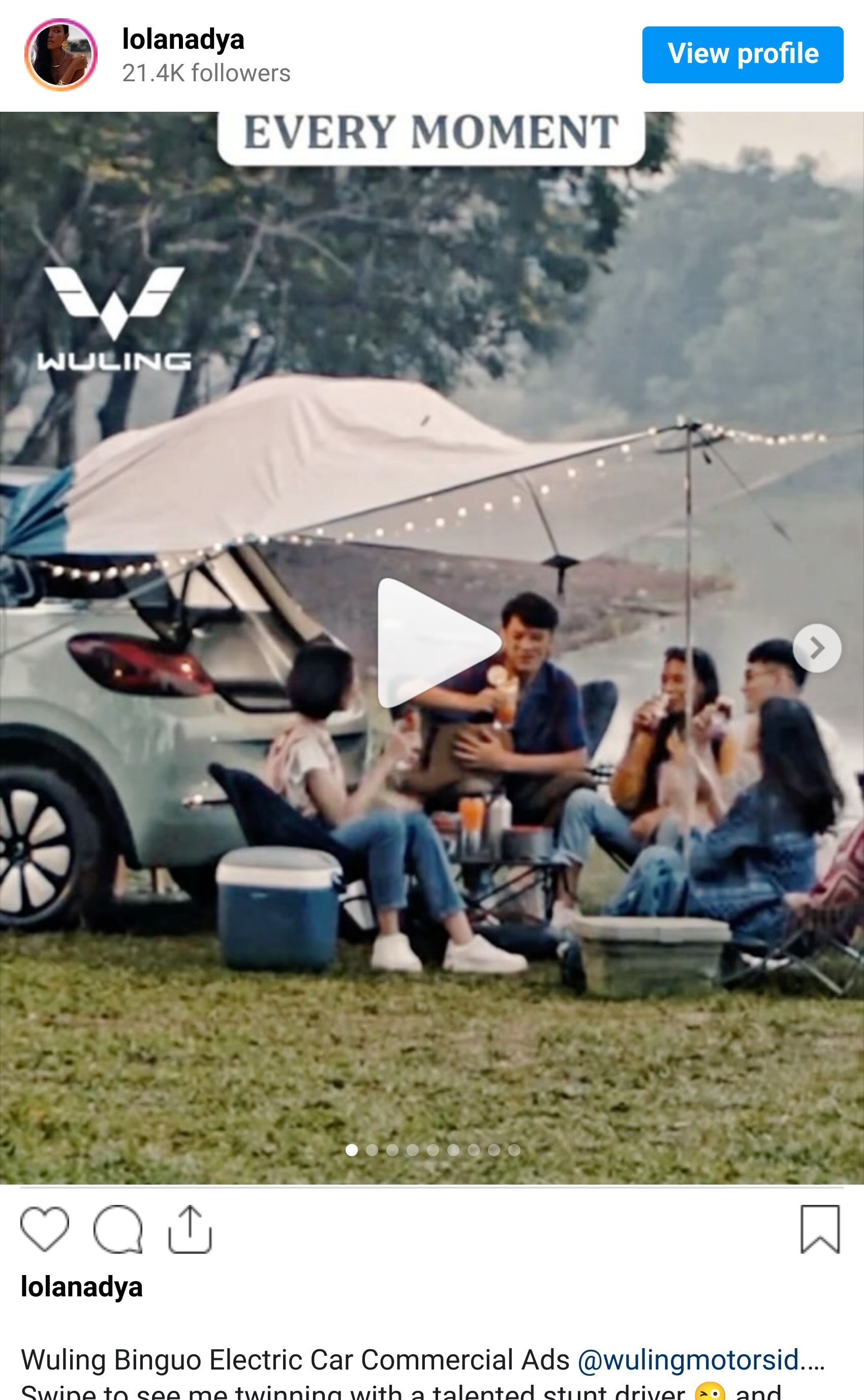
Customization as Culture
If the ads tell one story, social media tells another. On Douyin and Xiaohongshu, you find endless clips of owners decorating their Minis with decals, wraps, and pastel paints. A pink Hello Kitty edition has become a recurring meme. The car is cute, light, and endlessly modifiable. It is the Crocs of the EV world.
In a consumption era shaped by personal branding, this matters. Even a buyer who does not care about horsepower cares about identity. Wuling unintentionally built a blank canvas in the shape of a car.
And when everyone posts their customization online, the virality becomes free marketing for a vehicle with no celebrity CEO and no Silicon Valley mystique.
The Future of AI in Marketing. Your Shortcut to Smarter, Faster Marketing.

This guide distills 10 AI strategies from industry leaders that are transforming marketing.
Learn how HubSpot's engineering team achieved 15-20% productivity gains with AI
Learn how AI-driven emails achieved 94% higher conversion rates
Discover 7 ways to enhance your marketing strategy with AI.
The Economics Behind the Phenomenon
The deeper force is economic gravity. Former officials have openly acknowledged that more than half a million Chinese citizens earn around 1,000 RMB per month. For this cohort, buying a Tesla is not a stretch, it is a fantasy. Yet mobility is essential to economic mobility.
Wuling captured this cohort with ruthless efficiency. They built domestic supply chain relationships that trimmed every cost. They reduced features until the price fell into the psychologically reachable zone. And once the base was established, they scaled.
In 2024, the company sold 1.5 million vehicles. Eight hundred thousand were EVs or other new energy cars. More than two hundred thousand were exported. Indonesia is their largest overseas market. Europe receives the same car with an Italian sounding rebrand. In the Philippines the model is renamed Game Boy, a playful nod to nostalgia and local taste.
There is a lesson here for investors watching the EV wars. The global auto conversation is dominated by premium brands, yet the volume game will be won by whoever captures the next billion mobility upgrades. The market leader of that segment will not look like a Porsche. It will look like an appliance with personality.
The Blind Spot in Western EV Thinking
Western analysts often assume that EV adoption depends on improving range, cutting charge times, and matching the status trappings of luxury cars. That is true for the affluent top slice of the market. It is irrelevant for everyone else.
In emerging markets, the biggest competitor to an entry EV is not another EV. It is the electric scooter. It is the gas tricycle. It is the second hand motorbike. For buyers climbing that ladder, the Mini EV is not a compromised car. It is a massive lifestyle upgrade.
Which is why the Hongguang Mini EV should not be treated as a quirky Chinese outlier. It is a blueprint.
The Real Story in China’s EV Boom
China’s EV surge is usually framed as a battle between BYD and Tesla. Xiaomi recently joined the stage with a sleek performance sedan marketed toward young professionals who grew up with the brand. These companies deserve the attention. They have redefined the global auto industry.
But the top selling EV in China tells a more grounded truth. Innovation is not only about breakthroughs. It is also about restraint. It is about building for the customer who will never appear in a glossy investor deck but who forms the real backbone of demand.
Wuling understood that early. The market rewarded them for it. And as EV competition intensifies and supply chains mature, the next wave of global winners may look much more like Wuling than the headline brands.
Sometimes the most disruptive vehicle is the one that simply gives people what they actually need.
Interested in learning more about EV? Check out our previous coverage here:
Shoppers are adding to cart for the holidays

Over the next year, Roku predicts that 100% of the streaming audience will see ads. For growth marketers in 2026, CTV will remain an important “safe space” as AI creates widespread disruption in the search and social channels. Plus, easier access to self-serve CTV ad buying tools and targeting options will lead to a surge in locally-targeted streaming campaigns.
Read our guide to find out why growth marketers should make sure CTV is part of their 2026 media mix.
That’s all for this week. If you enjoyed this edition, we’d really appreciate if you shared it with a friend, family member or colleague.
We’ll be back in your inbox 2 PM IST next Sunday. Till then, have a productive week!
Disclaimer: The views, thoughts, and opinions expressed in the text belong solely to the author, and not necessarily to the author's employer, organization, committee or other group or individual.